WUR at COP 30:Student Experience
By Samir Mammadov
What is COP?
The Conference of the Parties (COP) is an annual meeting of the UN Framework Convention on Climate Change (UNFCCC), where countries (Parties) gather to discuss and plan actions to combat climate change. It’s the governing body where climate agreements are negotiated and international collaboration strengthened. The Parties of the COP include 198 countries and the European Union. NGOs, environmental organisations, UN bodies, scientists, businesses and Indigenous communities participate in the annual meeting. At COP, topics such as climate mitigation and adaptation, climate finance, and innovation are at the centre of the discussions. It is a key event in the field of environmental governance because of decisions done through discussion.
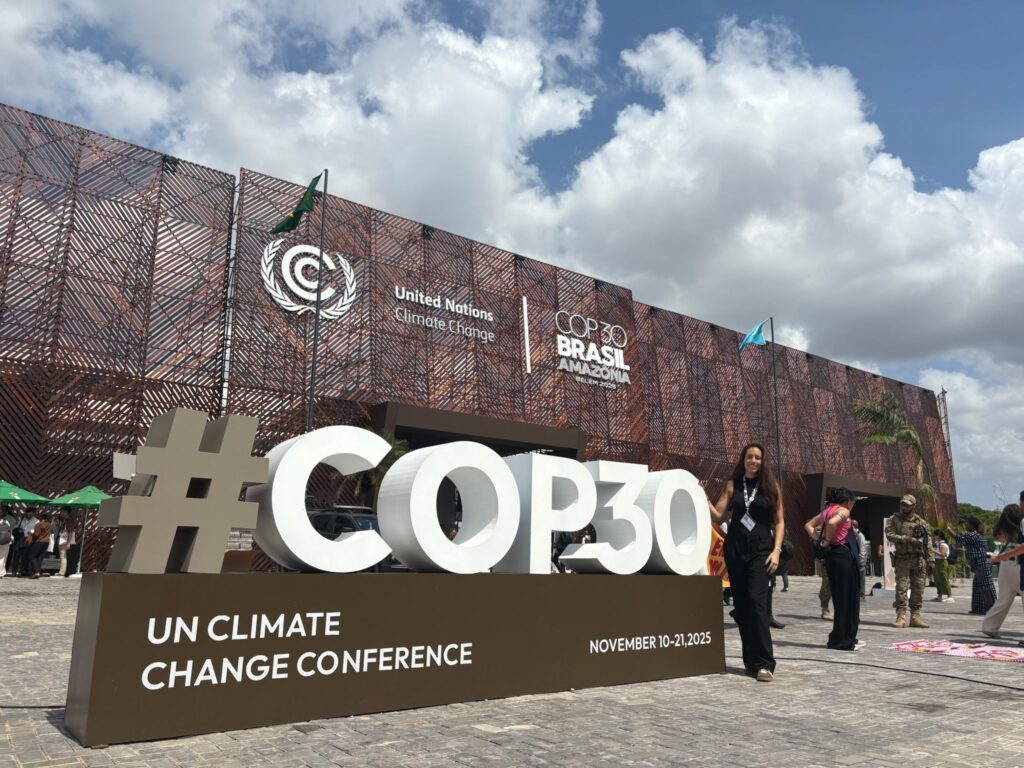
The 30th COP took place from 10-21 November 2025 in Belém, Brazil. It is the first COP ever held in the Amazon region. Around 42,000 participants attended the event, with the record presence of Indigenous participants (5,000). COP 30 was branded as the “Implementation COP” to translate previous goals into action.
At COP30, key topics included strengthening national climate plans, speeding up the transition away from fossil fuels, and scaling up renewable energy. Discussions also covered climate finance, loss and damage support for vulnerable countries, protecting forests, and making food and agriculture systems more sustainable.
WUR Representatives
Could you tell us a bit about yourself?
I did my bachelor’s in environmental sciences at WUR, focusing on environmental policy, economics, and law. Then I went on to do a double master’s on Environmental Sciences and Earth System Science. My main interests are disasters and resilience together with engagement in policy making. I have been involved in extracurricular activities such as SDG tracks, research assistant and I was also Chair of International Relations for Youth for Climate in the Netherlands.
How did you become a WUR representative for COP 30?
It was honestly a very lucky and unique experience. Together with the Green Office, they decided to restructure and bring the role back, and there was a formal application process. I was lucky that my involvement in external activities, like Youth for Climate and research assistant work helped my application stand out. A lot of strong candidates applied, so it really felt like things came together at the right moment.
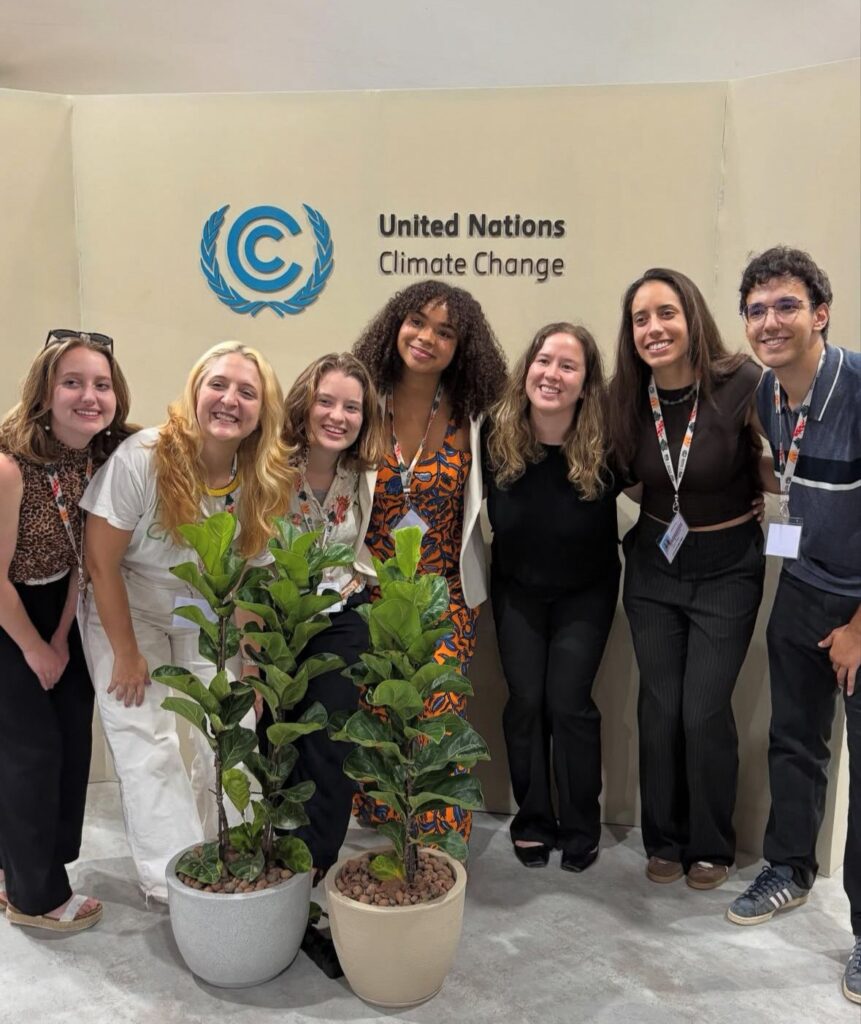
Once Demi was chosen to be the representative, together with the rest of the team, she started to plan strategies, deliverables and statements from WUR on specific topics. At COP30, the team from WUR worked on practical climate solutions that connect research with action. They focused on protecting the Amazon, supporting Indigenous and local communities, and preventing environmental tipping points. They also worked on making food systems more resilient by promoting climate-smart farming and reducing food loss and waste. In addition, the team contributed to discussions on climate policy and finance to help turn global goals into real change.
What was the strength of WUR that came out during COP 30?
We are mainly known for our strength in education in climate, environment, and agriculture, and that is where we can make the biggest contribution. Rather than taking strong policy positions, which is not our core role, we focus on the practical side of sharing knowledge and building capacity. By engaging in spaces like the Higher Education Pavilion, we can really make an impact, because there is a lot of energy and collaboration there. We are good at explaining complex environmental challenges, training future professionals, and showing the work of our researchers and their projects, and that is how we add value and make our contribution visible.
What were your responsibilities at the event?
I mainly focused on the Higher Education Pavilion, making sure WUR was well connected there. I also helped bring student perspectives from WUR into the Children and Youth Pavilion, including helping draft the youth opening statements during the first two days. In addition, I joined the daily strategy meetings and shared student input to help shape the overall approach.
How was the experience from your perspective?
It’s a bittersweet experience. On one hand, it was incredible to finally see my years of study applied in real negotiations and to engage with high-level people who can make a difference. The youth community was also amazing, strong, supportive, and strategically working to amplify our voices.
On the other hand, it was disappointing to see the behavior of many adults in power, from poor intentions to a disregard for rules. The negotiation landscape has changed, it’s known about strategy and finding loopholes, not following procedure. This makes it especially hard as a first timer, where the formal language and hidden conversations in the hallways can be overwhelming. Thankfully, having a close youth community was essential. We decoded the discussions together and strategized, which made navigating the complexity possible. Preparation and community support are vital.
Do you have any tips for students who are interested in following your path?
What inspired me most is the shift in our generation’s mindset. We used to say, “youth is the future,” meaning we’ll be affected later. But that’s not the case anymore, the future is now. Climate crisis is happening right now so it’s important to be local about it and act on it. I would say first, find what you are passionate about and how you can contribute. Then once you’re at COP or similar events, talk to young people, establish connections and make your voices plural.It is very important that young people come together and show that we should be the integral part of decision making”