
Budgeting 101: The Exchange Student’s Guide to Smart Spending

By Zlatoslava
Welcome to another blog of the exchange series!
Before, we have covered how to apply for a semester abroad, and I have shared my experience while on exchange in Japan so far. In this edition, I am going to give you some top tips on how to be smart with your money, AKA how to manage your costs as a student in a foreign country.
This often means a new environment, economics, people, language and even currency. All of those things might make controlling your spending a bit harder than usual. Luckily, I am someone who has been through this, so don’t worry, I’ve got you!
Your Preferences & Finding Balance
Before starting, it’s important to cover one thing – setting a budget.
You will be doing your exchange with other students from different universities, amongst whom every student has a different budget and interests. Aside from your studies, you will have free time, which is great to spend on the things you like. One might like to explore the city, others to go shopping at a fancy store, a third may want to travel to another city, and some might even visit another country, and some days you will just want to rest and reset.😄

Wanting to experience the most of your exchange, but at the same time, being budget-conscious, or should I even say “experience-conscious“? I am the type of person who, most of the time, would choose spending money on exploring another area over an expensive restaurant. However, that doesn’t mean I am holding myself back from the latter!🍜
My advice is to find out what your preferences for activities are so that you can structure your stay better. Nevertheless, go all out when it comes to exploring and trying new things! As I’ve said before, there is plenty of time for everything, so make it diverse and interesting. Sometimes there might be things that you think don’t really suit you. However, trying out and having the balance of experiencing various things is key!
Track Your Expenses
It is important to keep an eye on how much you spend since it is very easy to subconsciously lose track of your money. There are some great budgeting apps like YNAB, Rocket Money, Goodbudget, Spendee and so on. Personally, I don’t track every single expense since life can get quite busy, and this is more of a tedious work for me. I am, however, conscious of how much I spent by doing the following:
- Have an approximate weekly budget for groceries (Note: keep in mind that in another country, prices are different and you might need to spend less or even a bit more than what you usually pay at home)
- Whenever possible, I pay with a card, since it allows me to later see how much I have spent and where in the banking app. It is a great way to have an idea of how much to spend, monitor where your money is going, and make any changes if necessary.

Student Discounts
Those are other great advantages of being a student. Museums, attractions, tickets, subscriptions for services, student internet and data plans may all provide lower prices for students. Even some food, clothing or drug stores may give a student discount. Make sure you bring your student ID!
Buy Second-Hand
Purchasing things second-hand significantly decreases costs, and most of the time, they are as good as new! So, why not consider being more sustainable?😉 Amongst the things you can find second-hand are:
- University and personal interests books
- Home and kitchen appliances
- Clothes
- Furniture and decorations
On a side note: I have noticed that, here, in Japan, the second-hand culture amongst students is not as popular as in Europe when it comes to setting up your home. While in the Netherlands, every student housing building and a group chat and sells their belongings there, in Japan, clothes second-hand stores are more common instead.
If that is the case in your host country as well, don’t hesitate to still look and ask around.

Share with Other Students
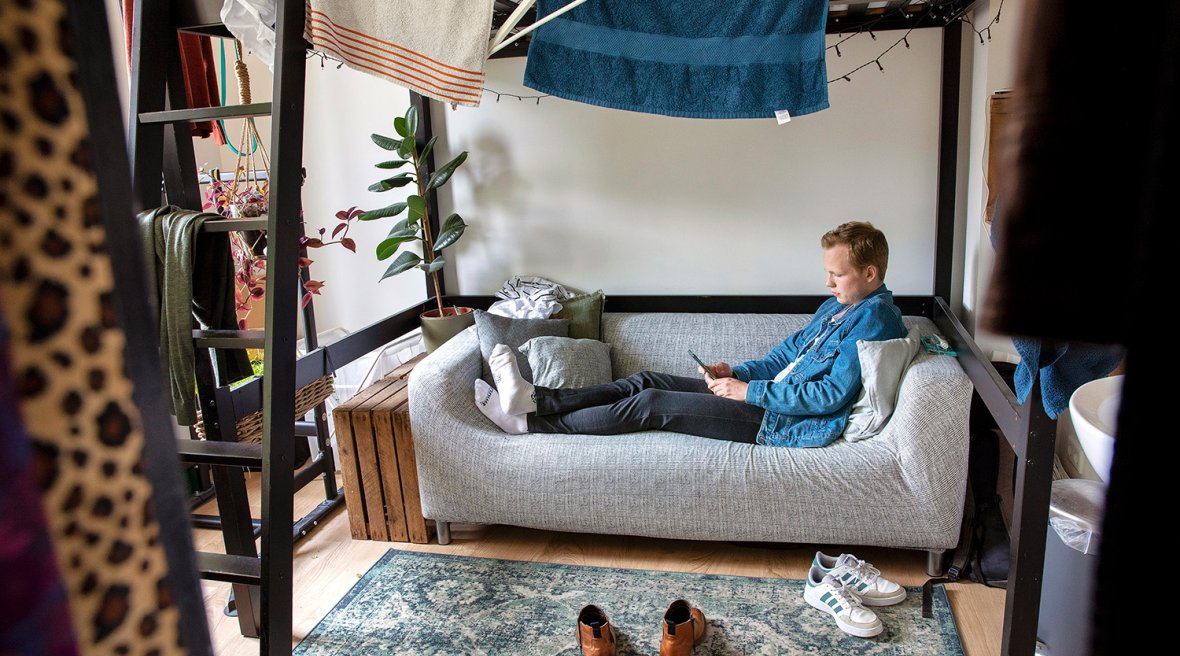
If you live in the same dorm with other (exchange) students, it is quite convenient to share costs for some things, since you’ll all be using them and won’t be there for long. Consider splitting the bills on some of the following things:
- Kitchen appliances
- Cleaning materials
- Food products that you can buy in bulk like salt, sugar, flour, rice etc

Limit Eating Out, Cook at home Instead
You are in a new country with a new food culture, of course, you would want to enjoy the food. However, try to avoid eating out too frequently. Instead, strive for home-cooked meals. They can take a bit more time but are always the best – not only healthier but also with impeccable taste to your liking!😁
Tip: Organising a potluck with the rest of the international students (and why not with locals too!) is an amazing way to stay connected, while enjoying home-made food. Moreover, this is a way to showcase your national cuisine, so why not turn it into an enriching event for experiencing and learning about different cultures?

“Inheriting” Belongings
When you learn that you are selected for your exchange, get in contact with the students from the year before you, who might still be in the host country. Previous year students can pass down some belongings to you, which makes the dorm-shopping hunt way easier. Some things that are purchased for the dormitory or just simply can’t fit in the suitcase on the way back can be given to the next visiting students. It is always the best alternative to throwing them away, especially when they have been used for only a couple of months.
Explore Scholarship Opportunities
There might be scholarships available for you while on your semester abroad. Search for them on a national level (funds from the host country), and even from organisations from your country. It is important to do the right research for such topics, since the outcome does reflect on your budget. Read a bot below on how you can ask the host University for assistance!
Find an Affordable Supermarket
Especially in the big cities, there are always a lot of supermarkets and stores. However, often they don’t differ that much and even have the same assortment of products but with different prices. Go around and see which works best for you. Also, make sure that such stores are relatively close and convenient. If they are too far away, then opting for another medium-priced option might be more sensible.
Tip: Don’t forget to also check for small vendors, such as fruit and vegetable shops. In Japan, I have noticed that the products are cheaper there than in the big supermarkets. I feel like that in Europe, most of the time, it is the opposite and small businesses have higher prices. But, still drop an eye on that option as well, no matter where you are studying.
Another thing in Japan is that snacks and other non-pharmaceutical goods are sometimes cheaper in the drugstores compared to supermarkets.

Make the Most of Your University
Don’t forget you’re a student, which comes with quite some perks!😁
You can use your University’s facilities, such as the sports centre, study in the library or on campus instead of in a cafe, or even sign up for a course.
For instance, even if not as great as commercial gyms, I am using the one in the University. There is a one-time fee, so it costs nothing compared to the rest. In other universities, it might even be free. The price difference is huge, so eliminating this expense, while not limiting yourself in any kind of way, has a great positive impact – convenient location + lower price + meeting and going with other students!
Moreover, there might be occasions where special initiatives for students are organised. Those can be from affordable lunches to educational seminars and excursions.
Tip: Being informed is essential! Make sure to ask the locals, your friends, teachers and supervisors. Let them know that you are interested and would like to stay in contact about such things. Something really fun might pop up.🙂
Lastly, your University may have a financial aid and support centre. You can turn to them if you’re expecting any challenges regarding your finances. If that is not a popular practice in the institution, then you can seek help from the international centre at the University, responsible for all exchange students. They can advise you on what is best to do and connect you with the right people.

You see? Smart spending might actually not be that hard, you just have to know where and what to look for!😄
I hope those insights are useful for you, and let me know in the comments if you have any other top tips on budgeting!
See you around,
Zlatoslava🌟