Virtual Open Day 2025: Q&A Recap

By Zlatoslava
Did you know that last week, on December 4th, the Virtual Open Day (VOD) took place?
It was for all prospective students – Bachelors and Masters, EU and non-EU! Presentations about the different study programmes as well as insights into the student life at Wageningen University and Research (WUR) were shared.
If you missed it, don’t worry. We’re here with a special recap of some of the most important Q&A bits, just for you!
Shall we get started? 😀
Important information
Before we begin with the Q&A, please check the BSc and MSc application details to ensure you don’t miss any important information. Useful are also the BSc and MSc tuition fees and Legal Residence details.
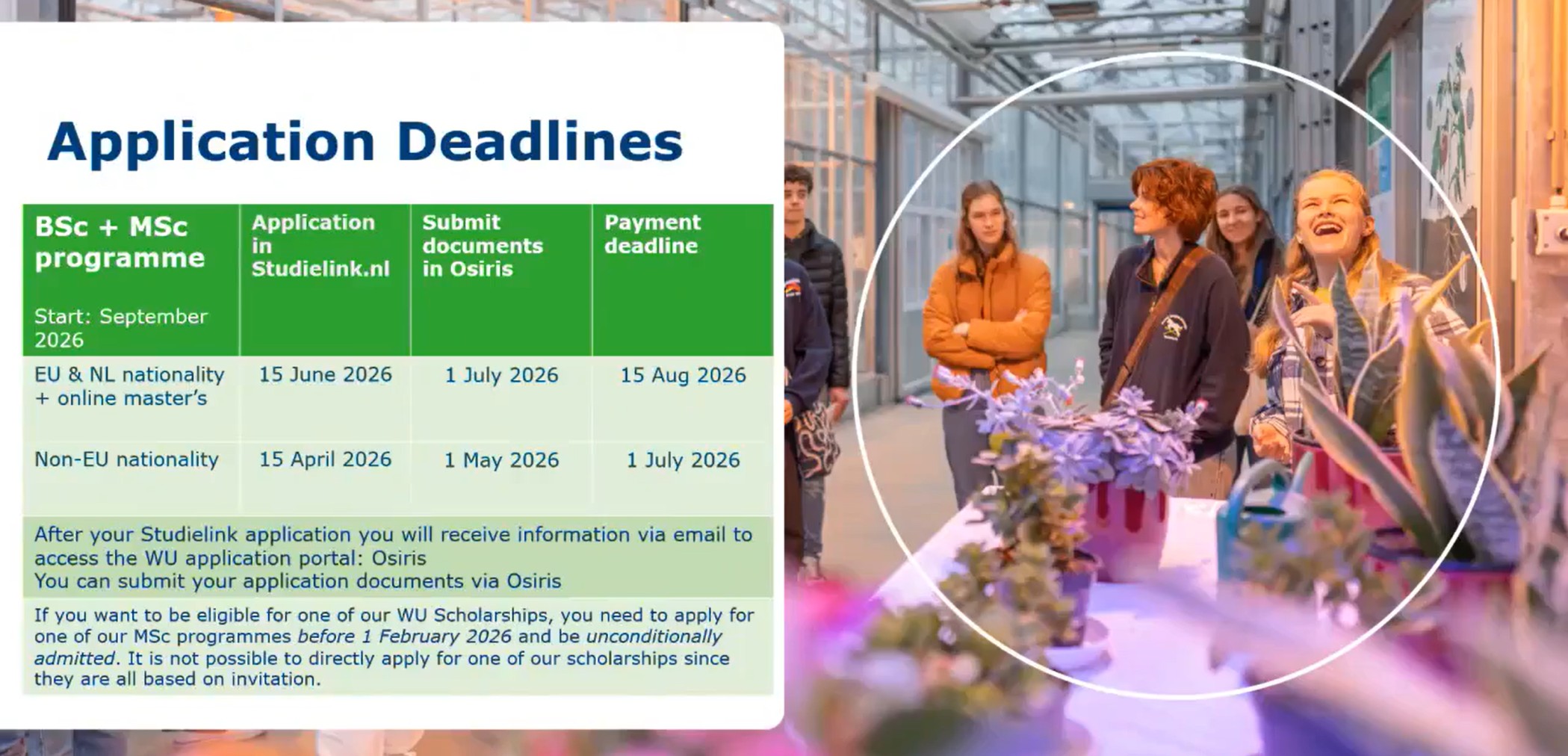
Below, you can see the application deadlines for all students. It is important that you apply on time and within those periods.
What to do before & after coming to Wageningen
This is a question every prospective student is wondering. Without a doubt, it is important to be prepared when going to another city or country. Check out what you need to do!
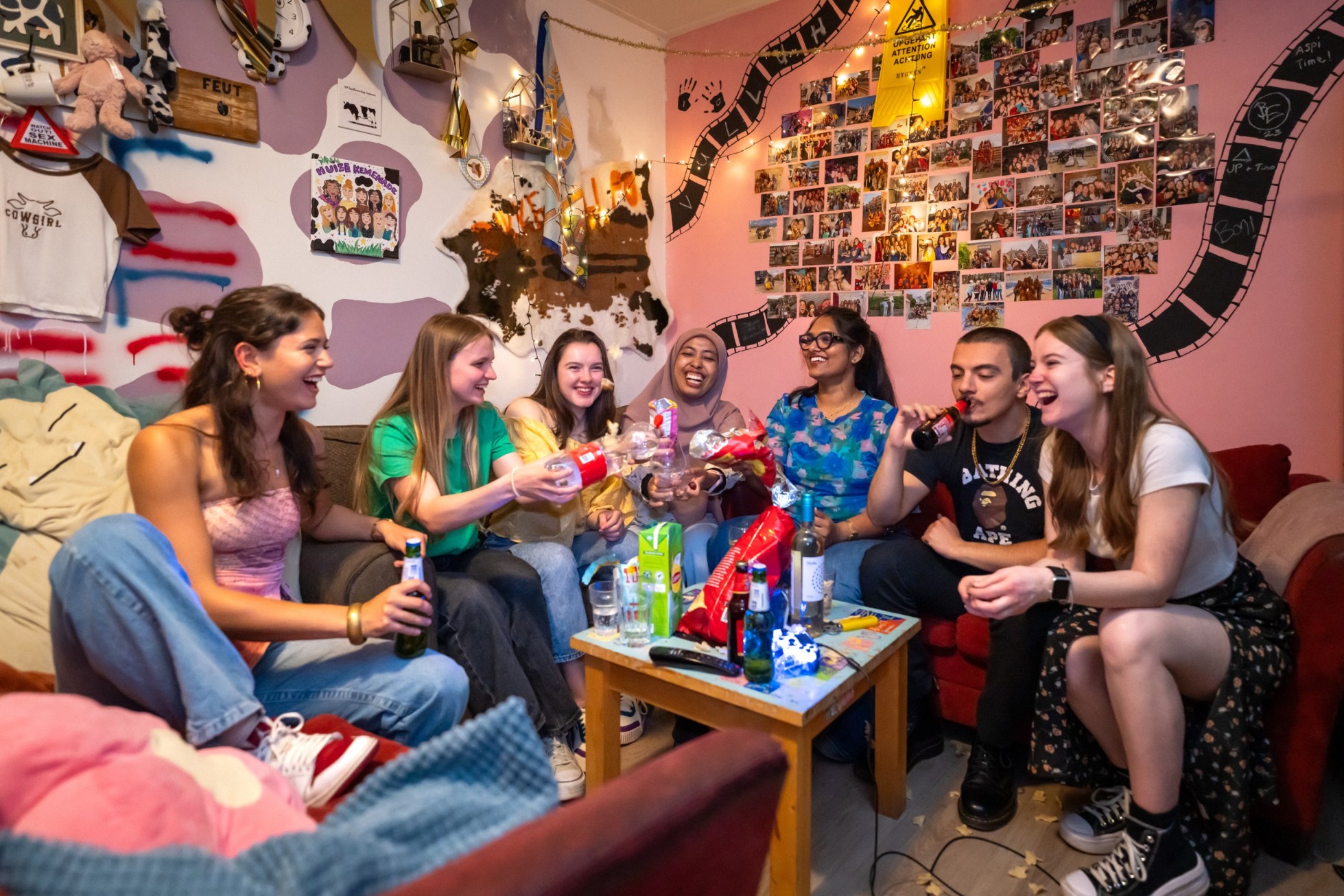
- Housing!
Searching for a place to live months in advance is crucial. Most of WUR students find their housing through room.nl with Idealis. However, there are many more options such as DUWO, websites like Kamernet, and Facebook community pages. Those and many more are listed and described here. Additional tips are always useful, so take a look!
It is advisable to start looking for a room at least 3-4 months in advance. However, the earlier, the better! Most websites’ queue position (including room.nl) is based on registration time, so make sure you register early.- Rent price can vary between 500€ to 800+€, depending on numerous conditions like size and type of housing you have – self-contained or with shared facilities. If you rent a self-contained room, you might also be eligible for a rent subsidy, which is also discussed in a separate blog.
- Living environment
If you live “in a corridor”, meaning you share a bathroom and/or kitchen and other common spaces, you can enjoy cosy gatherings and dinners with roommates. However, you’re often not the one choosing your roommates, so if you’re not a full extrovert and prefer to have more personal space, then a self-contained room might be the better choice for you.
- Buy a bike
Organising getting a bike in advance is great since it will be your main mode of transportation. In the Netherlands, there are twice as many bikes as cars! 😀
Before coming to Wageningen, we advise you to look for a bike on places like Facebook Marketplace and Marktplaats, so that when you come, you can start using it right away.
Find many more useful tips on WUR’s official page and the Pre-Departure and First Weeks in WUR blogs. Make sure to also drop a read on the To-Do List of Things once you arrive in Wageningen!
Part-time student jobs
Yes, you are allowed to work while studying! For EU students, that can be however much you wish, and as a non-EU student you can work 16 hours/week or 3 months during the summer periods, depending on your residence permit. If you want to work more than 16h/week, then you need to apply for a different type of residence permit.
It can require a bit more effort from your side to find a student job since Wageningen is quite a small city. Nevertheless, many students still manage to do so. Find out all the secrets for a successful job hunt in the blogs on student part-time jobs and more tips about that!

Scholarships
You can’t directly apply for a scholarship, instead, by applying for your study programme, every application is checked, and if eligible for a scholarship, you will be further contacted. It also depends on your GPA, country of origin and other BSc or MSc criteria.
Organising your studies
- Overall balance
It is important to find the balance between your studies, personal life, leisure and potentially a student job. Planning your days ahead is great, but also don’t forget to leave some room for reset! You can go to the Rhine River and enjoy the sunset or chill at campus outdoors or indoors. You can go explore the city, take on a cycling trip or enjoy a solo date! Spending time outdoors is great and Wageningen is the perfect place for nature lovers! - Planning your Masters
During the 1st MSc year, you take different courses. Before the start of your studies, together with a study advisor, you plan your Master’s, where you define the courses that you want to have and other personal cases like prolonging your thesis or internships.
Choosing a thesis topic for your MSc was also amongst the Q&A on the Virtual Open Day.
The procedure starts around the end of your first year, after you have obtained a certain amount of ECTS, where you orient in the topics you like and their supervisors. Most of the students start their thesis around late May.
Tip: It is better to start at the end of the 1st year since that gives you the option to better define your research topic.

Health insurance
EU students can have insurance in their own countries and use the EHIC (European Health Insurance Card) to cover certain costs, however, it doesn’t provide complete insurance. You can always get an additional one once in the Netherlands. Non-EU students must be insured, and that is arranged by WUR with Aon.
Travelling and public transport
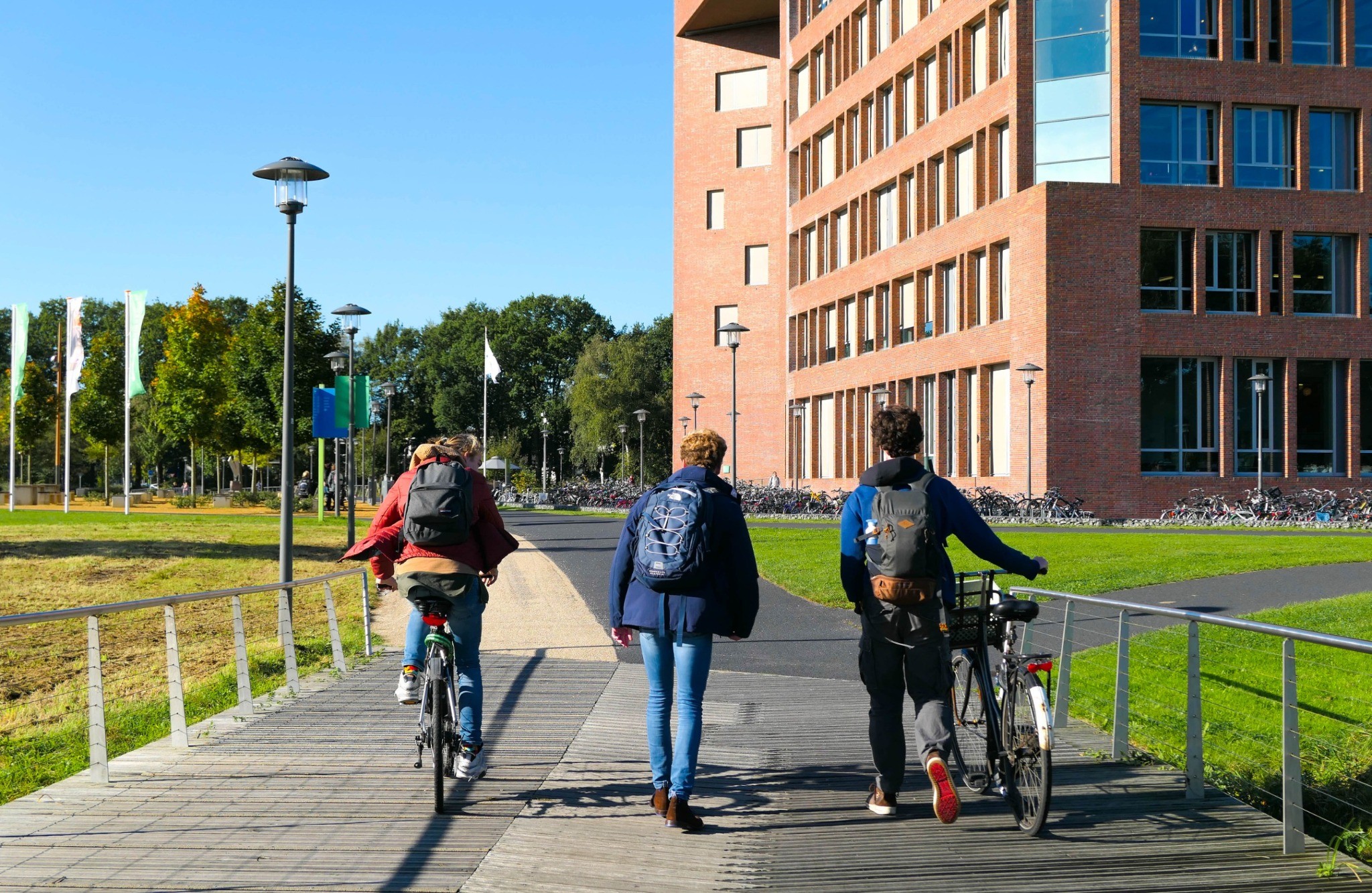
- Within Wageningen, most students just use their bikes since the distances are close, at most 20-25 mins for the two furthest parts! It usually only takes me 10 minutes of biking to go to campus, and I’m considered to be living in the relatively distant student housing. That is also the approximate distance you will have to usually bike, not a lot right?
If the bike is not for you, there are buses in Wageningen with which you can commute.
- Outside Wageningen, for travelling to other cities or countries, the train is the go-to. There isn’t a train station in Wageningen, but there is one in Ede, which is 20 mins away by bus. The trains’ connectivity is great, and there are many of them running, so this is a convenient transportation mode. If you travel more frequently, you can get a subscription from NS, where you get free travel periods or 40% off during peak hours.
On the other hand, a more affordable option is taking an intercity bus or Flixbus. However, with the latter, you are a bit limited since you comply with their schedules.
In the cities themselves, you can also use buses and sometimes trams.
Learning Dutch & other languages
At the beginning of your studies, WUR offers you a free 8-week Dutch course, where you can learn the fundamentals of the language. Later on, you can continue with the upper levels or sign up for separate workshops and Dutch language learning courses.
Not having the time to learn Dutch? Don’t worry, the Netherlands is the number one country for English proficiency among non-native speakers. So, you can go around without knowing Dutch without a problem. However, it is still nice to learn some Dutch and chat with people and friends.;)
If you’re in for an extra challenge, In’to Languages offers the opportunity for learning even more languages!
More Questions?
Curious and want to know more about student life or your future programme? Chat with a student and ask them anything!
For other questions related to the application process or the studies, you can also contact the Student Service Centre via the contact form or by email at SSC@wur.nl.
Good luck and hope to see you around campus:),
Zlatoslava