Study in Wageningen: packing list

By Zlatoslava
Updated on: 27/07/2026
One day, you apply to study at Wageningen University (WUR), and before you know it, you have received your admission letter and soon have to depart. The suitcase is lying open on the floor, and you’re wondering what to pack for the Dutch climate. If that’s you right now, you’re at the right place since we’ll quickly sort this out together!
What do you actually need in Wageningen?
The answer depends less on how much luggage your airline allows and more on the answer to three questions:
- Is your room furnished or unfurnished?
- Which season are you arriving in?
- Are you coming from inside or outside the European Union?
I know you probably want to bring the “whole house” with you, but in the end you always end up overpacking a bit.😄 My advice: take the things that are difficult, expensive or stressful to replace during your first few days.
For the rest, lucky you, Wageningen is a student city, so reselling and giving away for free is a hot topic! Things are actually in great condition, so you can buy almost everything after arrival. Check some super useful tips for the best deals & stores!🤝
Before packing: check your accommodation
Do not start buying bedding, kitchen equipment or furniture until you have checked the description of your room.
WUR’s main student housing provider is Idealis, with rooms advertised through ROOM.nl.
Pro tip: Registering early matters because your registration date affects your position.
Next to that, there are other possibilities from private sellers or subrentals.
Make sure to check all the housing information and more tips!
Rooms may be:
- Furnished: usually with basic furniture such as a bed and mattress, desk, chair and wardrobe.
- Unfurnished: which may mean no bed, mattress, desk, chair or kitchen equipment at all.
It is good to have an idea of what you need to buy before arriving. So, for example, if you know you will not have a bed, you can already start looking for one in the student groups.
Packing list
1. Keep essential documents in your hand luggage
Never put all your important documents in checked baggage. Instead, have them secured with you in case something happens or your checked luggage gets lost.
Bring:
- Passport or official national identity card
- Entry visa or residence-permit correspondence, when applicable
- WUR admission or enrolment information
- Proof of health insurance
- Travel details
- Copies of prescriptions and relevant medical letters
- Emergency contact information
- One printed and one digital copy of each important document
- Housing contract (online or printed)
2. Laptop and study equipment
Your laptop is probably the most important item in your luggage.
WUR uses a bring-your-own-device (BYOD) model for practical classes, group work, coursework and digital examinations. Its current general laptop guidance is based around Windows 11, at least 16 GB of RAM and at least 512 GB of SSD storage. Chromebooks do not satisfy the general requirements. MacBooks can be used, but students may need Windows through software such as Parallels, and some course applications may still not work perfectly. Check the requirements for your particular programme before purchasing a new device.
Good to know you can also order the perfect student laptop from the WUR LaptopShop. In that way, you are sure it will meet all requirements and will be of good use!
Pack:
- Laptop and charger
- Phone and charger
- Headphones or earphones
- USB-C hub or adapters required by your laptop
- HDMI or DisplayPort adapter if your laptop lacks a standard video output
- Power bank
- A few USB cables
- Optional compact keyboard or laptop stand for longer study sessions
- Optional external drive or another backup solution
- Optional mouse
Having internet on campus is not a problem, as WUR provides eduroam Wi-Fi, and students connect using their WUR credentials. If needed, external monitors are available in Forum Library.
Electrical adapter
Dutch sockets use the European Type F plug with two round pins and operate at 230 volts. Bring a suitable adapter if your plugs differ. Check the voltage label on every appliance before connecting it; a plug adapter does not convert voltage.
A small European power strip can be useful, but it is normally easier and safer to buy one after arrival.
Will you need a router?
In most of the cases, you will need your own router for your home. However, don’t hurry to pack one from home since routers are widely available in the Netherlands. I might even dare say it is one of the most commonly sold things among students! Perfectly working routers are usually around €10-15.
3. Clothing for Wageningen weather
The Netherlands has a mild maritime climate: summers are generally moderate to hot, while winters are damp rather than extremely cold. Don’t be fooled; rain can occur throughout the whole year, but the heaviest rainfalls are in the autumn-winter period. ☔
A waterproof outer layer is more important than filling your suitcase with thick clothing. Read that again!
Essential clothing
Bring:
- Two or three warm sweaters or fleeces
- Clothes that can be layered
- Comfortable trousers
- Waterproof or water-resistant shoes
- Comfortable everyday trainers
- Sleepwear, underwear and socks
- One slightly formal outfit
- Sportswear
- Optional water- and windproof jacket with a hood and rain trousers. Those are an absolute essential for the Netherlands, but you can also buy good jackets and rainwear here in the Netherlands, in most of the stores.
- Gloves and a scarf for autumn or winter arrivals
For winter, a good coat is useful, but you do not necessarily need to transport the bulkiest coat you can find. Winter clothing is easy to buy locally, including through second-hand shops and departing students.
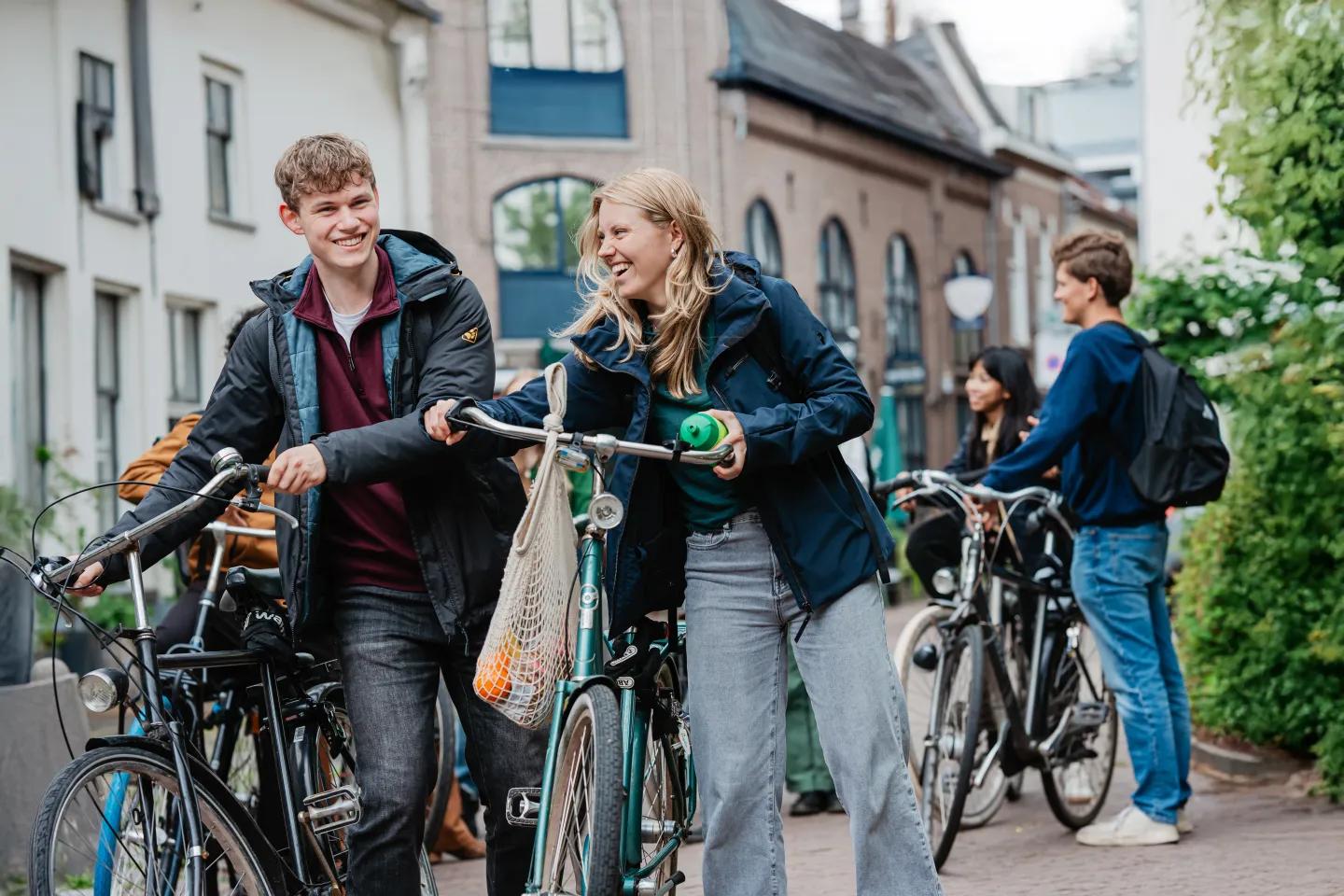
A hooded jacket is usually more practical for cycling than relying only on an umbrella. I think I have only used an umbrella not more than 5 times here. The rainwear is what saves me haha.
As a tip, many seniors will give away or sell their winter clothes for a very low price if you come around September.
4. Kitchen equipment: bring none to very little at first
Shared student corridors often already contain an unpredictable collection of pans, plates and appliances. On the other hand, private studios (self-contained rooms) may contain almost nothing.
Wait until you inspect the kitchen before buying:
- Pots and frying pans
- Plates and bowls
- Large knives
- Storage containers
- Kettle
- Toaster
- Rice cooker
- Coffee machine
- Other appliances
A favourite small kitchen tool can be worth packing, especially when it is inexpensive and difficult to replace. Bulky appliances generally are not advisable to bring since you can purchase here.
When bringing an appliance such as a rice cooker, confirm that it supports 230 volts and that its plug is compatible. A voltage converter for a heating appliance can be large, expensive and impractical.
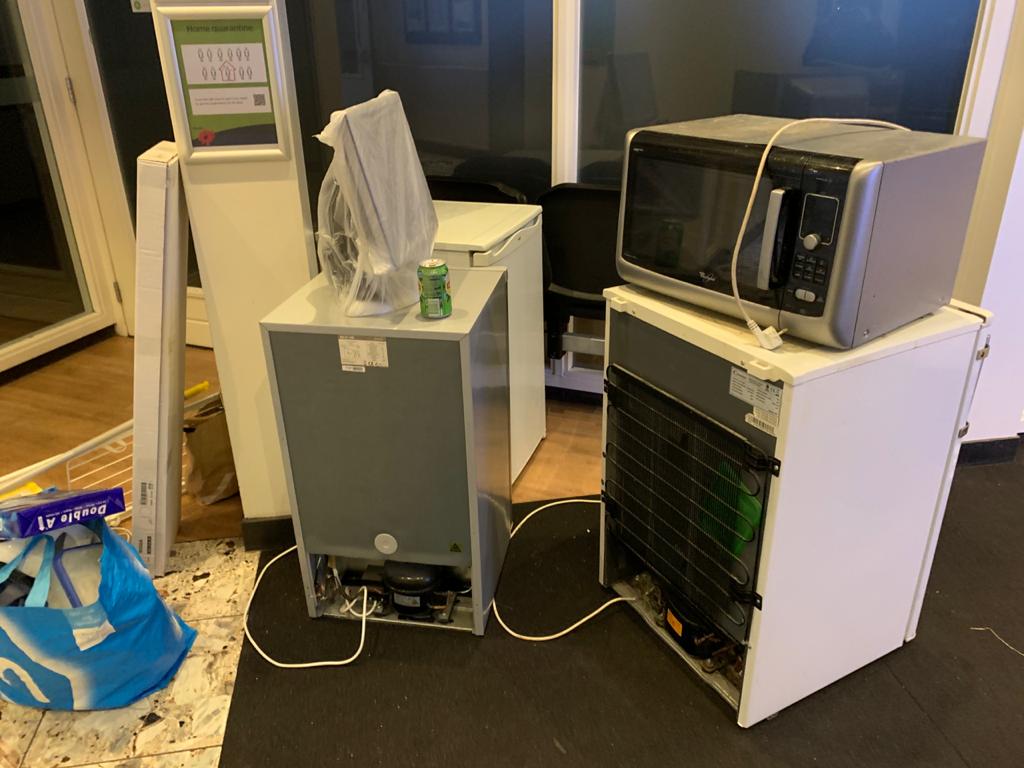
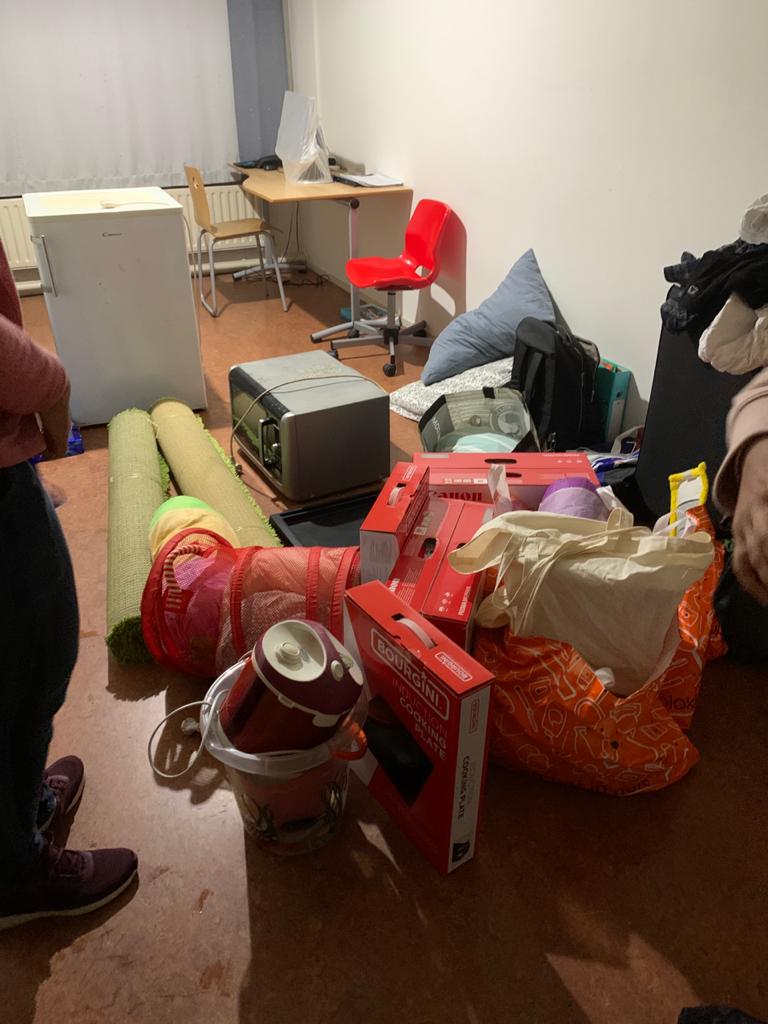
Example of ‘giveaway’ from seniors that you might find in your corridor (if you are lucky!)
5. Medicine, health and skincare
Bring enough regular medication for your initial period in the Netherlands, together with:
- The medicine in its original packaging
- A copy of your prescription
- A doctor’s letter using the medicine’s generic name
- Information about allergies or chronic conditions
- Spare glasses or contact lenses
- Insurance documentation
Most personal medicines can be brought into the Netherlands when you can demonstrate that they are for your own use. However, medicines covered by the Dutch Opium Act, including certain strong painkillers, sleeping medication and ADHD medication, may require an official certificate. Carry medication in your hand luggage and check the rules well before departure.
All international students need appropriate health coverage. EU, EEA and Swiss students should bring their European Health Insurance Card (EHIC) where applicable, while non-EU students should bring the insurance documentation arranged or approved through their WUR procedure. EHIC coverage has limitations, so supplementary insurance may still be advisable. Your insurance obligations may also change when you begin paid work or certain paid internships.
Skincare
Dutch winters can feel dry indoors because of heating, even when the weather outside is damp. Bring a small supply of products you already know suit your skin, particularly:
- Moisturiser
- Lip balm (best with SPF)
- Sunscreen
- Any specialist or prescription skincare
Regular toiletries are easy to replace locally, so there is little reason to carry a year’s supply of shampoo or shower gel.😉
6. Transport equipment: travelling to Wageningen
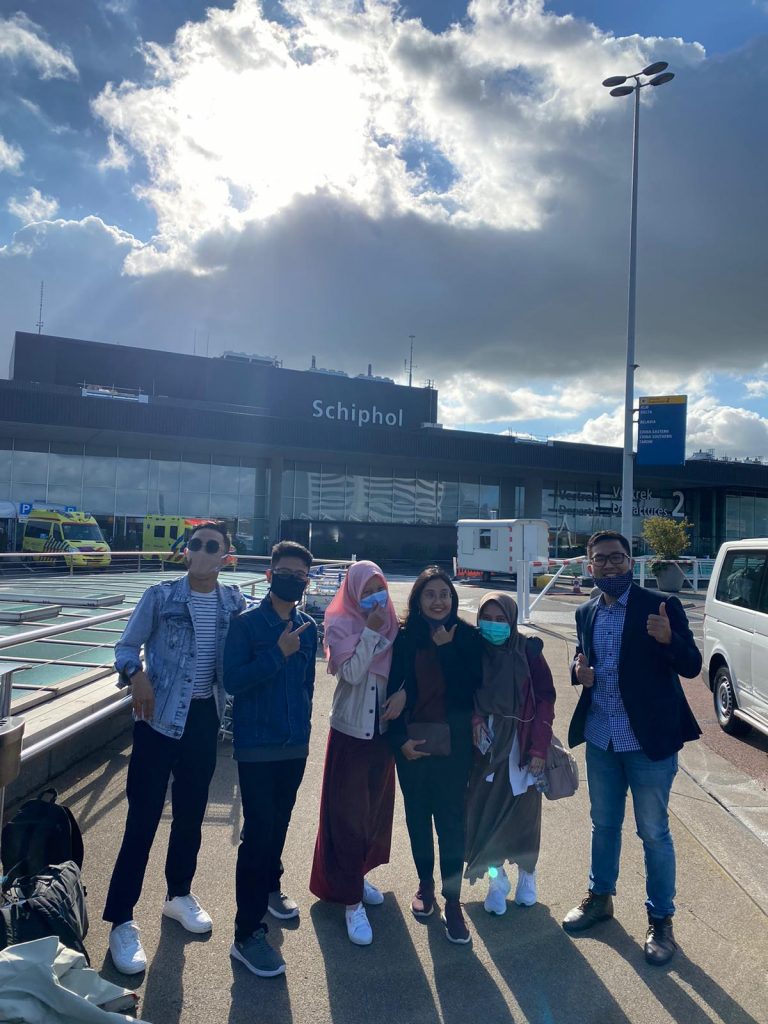
Wageningen itself does not have a railway station. The usual route is by train to Ede-Wageningen, followed by a bus to Wageningen or the campus. Check the NS and 9292 apps and planners shortly before travelling because routes and engineering works can change.
Later on, you will need an OV card, but for your first time here, you check in and out of Dutch trains, buses, trams and metros using a supported contactless debit card, credit card or phone, without registering first. Use the same card or device when checking out.
Keep a physical payment card available even if you normally use your phone, in case your phone battery dies or your foreign card is not supported.
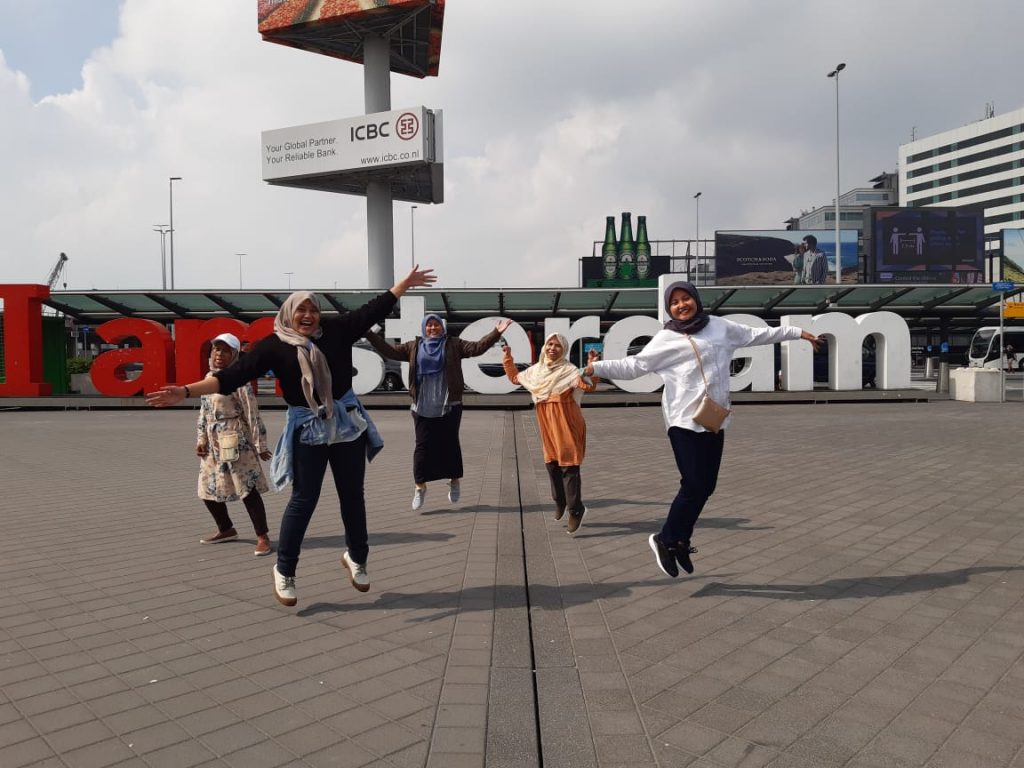
(Photo Credit: Dyah Ayu)
7. Comfort items: personal objects and food from home
A few familiar objects can make an unfamiliar room feel like home:
- Small photographs
- A lightweight decoration
- Favourite pillowcase
- Traditional clothing for international events
- Small musical instrument, when practical
- Items connected to your hobbies
These items are often more valuable emotionally than an extra pile of clothes.
Food from home
A small amount of familiar food can make your first weeks more comfortable. Food is also a great way to bond with your housemates, as everyone is curious to experience new cultures. Consider bringing:
- A favourite spice mixture
- Tea or coffee from home
- Factory-sealed snacks
- A small amount of shelf-stable sauce
- One or two easy first-night meals
Do not use half your luggage allowance for rice, pasta or instant noodles. Basic groceries and household products can be purchased in Wageningen.
Students entering the EU from a non-EU country must be especially careful. Meat and dairy products generally cannot be brought into the EU in personal luggage, while plants, fruit, vegetables and other plant products may require phytosanitary documentation. Products that violate the rules can be confiscated. Check the current EU and Dutch customs rules for the exact ingredients you intend to carry.
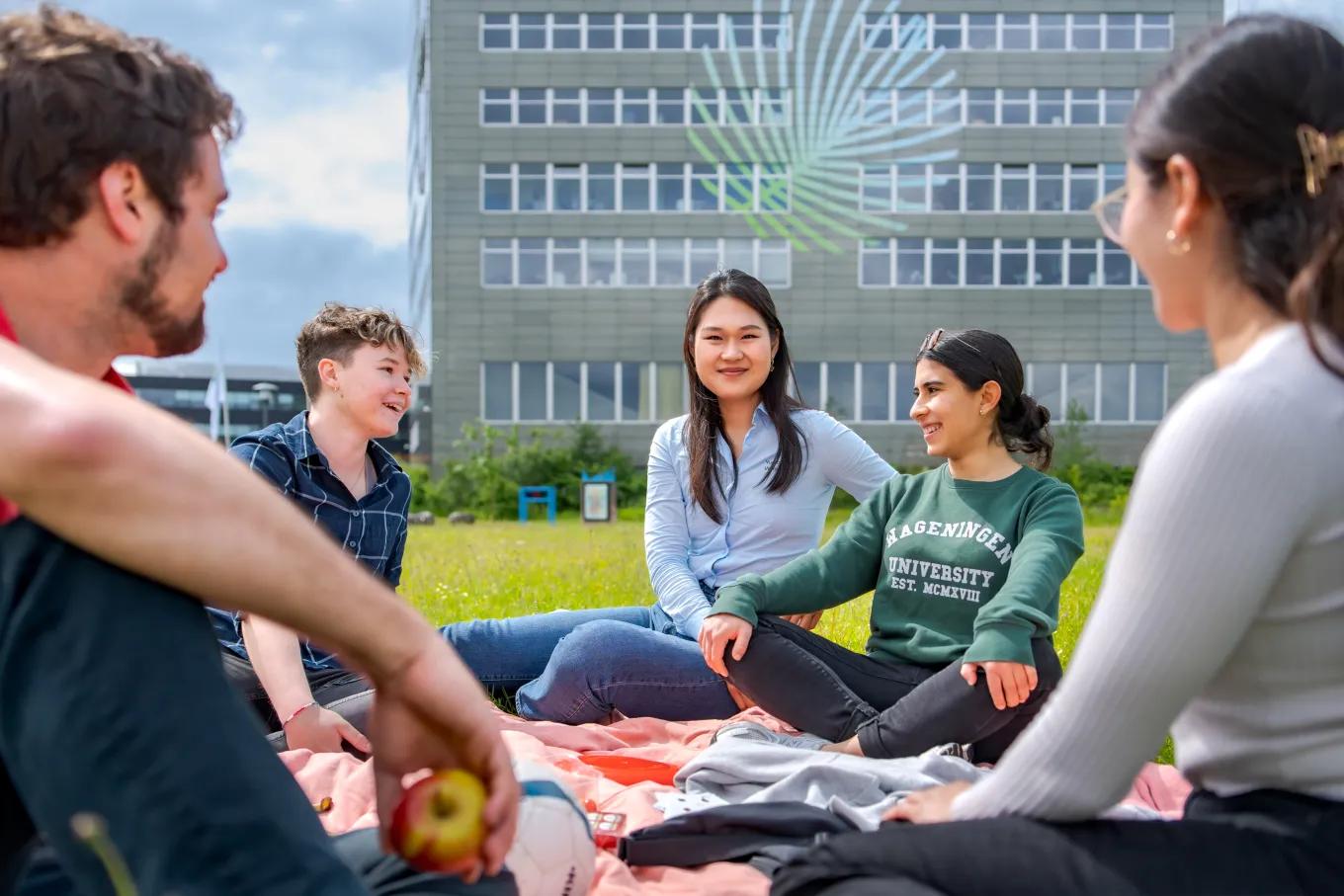
8. First-night room essentials
Last but not least, your first evening is not the moment to discover that you don’t have what to eat for dinner or comfy, clean clothes to change into.
Pack a small arrival kit:
- One towel
- Basic toiletries
- Toilet paper or tissues
- Charging cable
- Reusable water bottle
- A shelf-stable snack or food
- Sleepwear and a change of clothes
- Any medicine you need daily
But everything can happen! Let’s imagine the following situation: You arrive, it is one of your first days, if not the very first, and the whole day has passed moving in… suddenly you realise you need something! All stores are closed now, and you need it urgently.
What do you do if you happen to be in this situation?
You turn to the WUR student community! Shoot a message in your student housing group chat! What I love about students at WUR is that we always support each other, so whether it is a tool, food, material or something else, people always try to help you out. You might even be surprised how quickly things can be arranged! So, bottom line, don’t be shy; we were all newbies once. 😇
Final advice
Pack for your first two weeks, not your entire degree.
The most useful things are usually your documents, laptop, waterproof clothing, medication and a few objects that make you feel at home. Furniture, winter coats, kitchen equipment and everyday household products can be purchased after you understand your room and daily routine.
Leave some empty space in your suitcase. You will probably need it when you eventually leave Wageningen with more books, more memories and considerably more WUR merchandise than you expected. 🫣
I hope this blog helps you in deciding what to take to Wageningen. Have a great time packing and see you in Wageningen!💚
I love to study in this university.can u help me.I’m from Iran.&my major is natural resorces
Dear Nafiseh,
Thank you for your interest in Wageningen University. I will send you an email with useful information.
Best regards,
Luisa Gomez
Team International Students Advice |
1. I come from Uganda-Africa, is it possible to get a scholarship to study masters of animal science and breeding?
2. Which intake am I legible to apply for to study at Wageningen University
Dear Geoffrey,
Thank you for your interest in Wageningen University. I will send you an email with useful information.
Best regards,
Luisa Gomez
Team International Students Advice |
I come from Kenya-Africa, am requesting to get a scholarship to study masters of Actuarial science or Data science
2. Which intake am I legible to apply for to study at Wageningen University
Dear Minnie,
Thank you for your interest in Wageningen University. I will send you an email with useful information.
Best regards,
Luisa Gomez
Team International Students Advice |
Hi Luisa Fernanda, is it possible to further my studies in PhD Agricultural Economics at your school. I’ll be obtaining my MPhil Agricultural Economics by November. I’m from Ghana.
Dear Ezekiel,
For PhD’s I suggest you check our website. To see our available PhD projects, please visit this link https://www.wur.nl/en/Education-Programmes/PhD-Programme/PhD-Vacancies.htm.
Best regards,
Luisa Gomez
Team International Students Advice |
I am from Nigeria, I want to do my masters in your school. Preferably Agricultural Extension or rural sociology. Please I need your guide.
Dear Jonathan,
Thank you for your interest in Wageningen University. I will send you an email with useful information.
Best regards,
Luisa Gomez
Team International Students Advice |
I come from Indonesia, does Wageningen University accept diploma graduates which are equivalent to bachelor degrees?
I’m from Nigeria and I wish to apply for a masters degree in food science and technology in WUR.I need a guide and I’ll also want to know about the possibilities of retainership after studies. Thank you
Dear Mary,
I will send you an email with information about application to WUR.
Best regards,
Luisa Gomez
Team International Students Advice |
Hello l would love to study my master’s degree.Any scholarships available for international students.
Dear Valerie,
Thank you for your interest in Wageningen University. You can read about our scholarships on this link.
Best,
Luisa
I am from India . I would love to study my master’s degree here with a scholarship but what are the chances I would receive one ?please guide me. Thank you.
Dear Umme,
Thank you for your interest in Wageningen University! You can get more information about scholarships in this link.
Kind regards,
Laura Sanchez